
Vagus Nerve Toning: The New Frontier of Prenatal Yoga and Stress Resilience
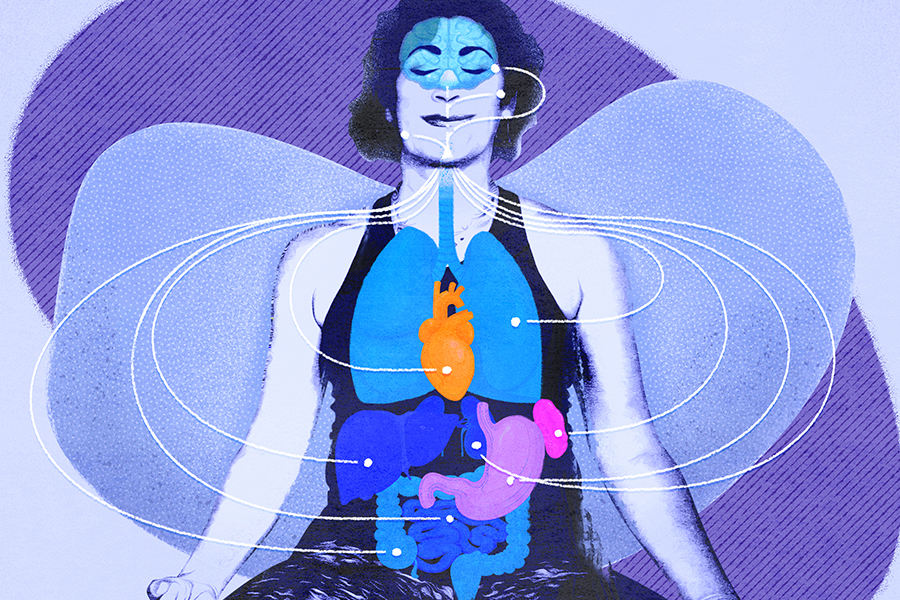
Traditional nursery designs (grey/green) are being shifted out. Now you can focus on nurturing your nervous system (and therefore your baby’s) through movements done during pregnancy. Some breathing exercises, humming with your baby and non stressful body postures can be your true guide. These movements will help build the tone in the Vagus Nerve. It is the head of the rest-and-digest part of your nervous system. Activating or toning this nerve by following mentioned techniques during pregnancy will help in many ways. It releases oxytocin, reduces cortisol, and helps develop an optimal intrauterine environment for your baby. This led to have healthy stress-coping skills throughout their life.
Emerging research is supporting the idea that vagal nerve toning is the “secret sauce” of prenatal yoga. It is using somatic techniques such as diaphragmatic breathing and humming combined with quantifiable biofeedback outcome measurement. This reduces the discomfort of pregnancy. Also, epigenetically creates a sense of calm for their children despite living in a high-stress environment.
Research shows that the vagus nerve is part of our body’s autonomic nervous system. It is responsible for regulating our heart rate variability (HRV)—which is one of the key indicators for stress levels. When we are pregnant, the vagus nerve tone develops alongside the fetus from breathing movements throughout the first trimester. This will increase the RMSSD (a parasympathetic metric), to the development of myelinated fibers during the third trimester. It enhances short-term HRV variability. When we tone the vagus nerve through somatic practices, we can help to lower the cortisol levels in the mother.
Elevated Glucocorticoids From Maternal Blood Will Reprogram The Developing Fetal HPA Axis (the Brain’s Stress Center) For More Heightened Reactivity.
A 2020 Study Demonstrated That Prenatal Exposure To Cortisol Is Associated With Greater Infant Cortisol Responses When Exposed To Stressors From 6 To 12 Months Of Age Even When Birth Related Factors Were Controlled For. Conversely, A Maternal Vagal Tone Is Significantly Associated With The Infant Vagal Tone At Birth, Providing An Opportunity To Support The Developing Fetal Emotional Regulation Systems.
The Other Piece Of The Equation To Support This, Is The Influence Of Epigenetics On The Way Vagal Stimulation Influences The Genetic Expression Of Stress Pathways. For Example, Preclinical Studies Have Demonstrated That When The Vagus Nerve Is Modulated, The Resulting Change Will Reduce Inflammation Caused By Maternal Immune Activation, Providing A Protective Pathway For Fetal Neurodevelopment. Therefore, The Way That You Are Calming Your Baby Is Active Biology And By Calming Your Biology, You Are Reducing Your Baby’s Future Anxiety Level.
Why Start “Low-Stim” Routines Early in Pregnancy
Currently, Many Families Are Faced With An Extreme Amount Of Overstimulation, With Children Spending Over 7 Hours A Day on Devices by the age of 2; Living In Places With Constant Urban Noise; and Constantly Receiving Notifications From Their Devices. To Build Resilience From The Inside Out, Setting Up A “Low-Stim” Womb Will Show The Baby That Regulated States (i.e., Quiet Sleep) And That They Are Susceptible to Parasympathetic Dominance to Live In Those States of Regulation.
A study that was completed in 2022 found that prenatal yoga led to enhanced parasympathetic heart rate variability throughout pregnancy. Women who practiced twice a week had better cardio-respiratory synchrony than those who did not therefore indicating maturity of the autonomic nervous system. In addition, babies born to mothers who practiced yoga had 20% greater heart rate variability which predicted less crying and easier to soothe babies.
Low-stimulus environments are the laboratories used for brain stimulation. Low-stimulation areas consist of dim lighting, soft levels of sound, and slower-paced movements. When you hum or sing, you create vibrations that travel to the vagus nerve through your throat. This shifts your body from a state of stress to relaxation. Babies who are exposed to low-stimulation environments have been proven to maintain a lower level of activation of the hypothalamic-pituitary-adrenal (HPA) axis. Moreover, these babies have been able to create an eat-sleep-play cycle, which they will continue as they grow.
It is like having a gym in the womb – train in low stimulation now for calmness later.
Uniting Classical Yoga with Modern Biofeedback
The Hatha Yoga Pradipika (15th century) prescribes using ujjayi (victorious breath) and bhramari (humming bee) breathing in order to establish a steady flow of prana – the modern day biofeedback is showing us the proof of some of the power of the vagus nerve. Ujjayi breathing creates stimulation of the vagus nerve through constricted throat muscle contractions inhibiting sympathetic activity and increasing baroreflex sensitivity to assist with controlling blood pressure. In 2012 evidence was given from an Indian study that showed a reduction in anxiety with the use of ujjayi breathing from beginners to advanced practitioners.
The sound of Bhramari humming creates vibrations through the vagus nerve which helps to increase lung space and oxygen levels within your body. Data from modern wearable devices like Oura indicate that just five minutes of Bhramari will cause Variability in your heart rate (HRV) to spike as much as when using a meditation app. When Bhramari is used in combination with EEG sensors, researchers can see that these spikes of HRV correlate with instant shifts into the parasympathetic nervous system.
This new understanding creates an opportunity for practitioners of yoga to be able to approach their traditional practice with a greater level of data-driven accuracy. Apps now allow us to track metrics in real-time so that we can fine-tune our yoga practice to achieve optimal benefits to both us and the fetus.
Vagus-Toning Prenatal Routine – A Practical Way to Establish Daily Flow
Once you have your yoga practice with a sequence of poses that are safe for each trimester, you can also take 15 minutes daily to do these poses. (If you’re not sure about the safety of a particular pose for your trimester, check with your doctor.)
Sequence Bhramari Humming: sitting in a cross-legged position place both palms on the ears, inhale, and during the humming sound (sound in “mmm”), feel the vibration in the skull. Continue for 1 – 2 minutes. For best results do this sequence in the evening so that you can quickly bring down your cortisol levels.
Gentle Supine Twist and Gargling Water Will Be Performed on The Floor: lying supine with a pillow under the head (only if you are less than 20 weeks pregnant), rocking the knees back and forth for approximately 2 minutes.
Closing Savasana: Leg Up Wall and Body Scan from Head-to-Toe. While lying in Savasana with your legs up the wall, do a body scan from your head down to your toes while humming softly. Remember to use your HRV app for ratings.
Here’s a helpful tip. Pair skin on skin with your baby after birth. This will help strengthen the gains you have made through vagal stimulation. It also helps you to feel more restful, which further reduces the number of kicks you feel in the womb over the next few weeks.
The long-term impact of this on you as a real mom will be realized through your toddler having well-balanced HPA systems, thereby reducing his/her tantrums and improving his/her level of focus. As he/she moves towards the adult years, this will translate into fewer instances of anxiety.
Your womb has been your personal yoga studio. Do your part and reduce your stress level by toning your vagus nerve through humming, deep breathing, and flowing with your body movements, and provide your child with the gift of serenity. Who’s going to start Vagus Nerve Toning today? Connect with Yogymummy and book your session for the same!
Reference research links-
| Claim Area | Key Link | Summary |
|---|---|---|
| Vagus basics & prenatal development pmc.ncbi.nlm.nih | https://pmc.ncbi.nlm.nih.gov/articles/PMC8488382/ | Review of vagus/autonomic system, HRV in pregnancy. |
| Maternal cortisol & fetal HPA pmc.ncbi.nlm.nih | https://pmc.ncbi.nlm.nih.gov/articles/PMC9743740/ | Prenatal cortisol programs infant stress reactivity at 6-12 months. |
| Prenatal yoga HRV benefits pubmed.ncbi.nlm.nih+1 | https://pubmed.ncbi.nlm.nih.gov/36233643/ https://pmc.ncbi.nlm.nih.gov/articles/PMC9573300/ | Yoga boosts parasympathetic HRV, cardio sync in 69 women. |
| Vagal modulation & neuroprotection frontiersin+1 | https://www.frontiersin.org/journals/immunology/articles/10.3389/fimmu.2023.1280334/full https://pmc.ncbi.nlm.nih.gov/articles/PMC10653300/ | Yoga/breathing stimulates vagus, reduces fetal risks. |
| Infant stress from maternal tone ruthfeldmanlab | https://ruthfeldmanlab.com/wp-content/uploads/2019/06/touch-and-infant-stress-reactivity.DS2010.pdf | Maternal vagal tone predicts infant regulation. |
| Ujjayi/bhramari for vagus insighttimer+1 | https://insighttimer.com/blog/ujjayi-breathing-pranayama/ https://www.kalindiyoga.co.uk/blog/2021/6/22/ujjayi-breath-and-the-vagus-nerve | Throat breath/humming tones nerve via vibration. |


One of my friend is looking for online yoga sessions. I have given you reference. Her name is Tina.
Hey Jenna!
Thank you, it means alot!
Pretty section of content. I just stumbled upon your website and in accession capital to assert that I get in fact
enjoyed account your blog posts. Any way I’ll be subscribing to
your augment and even I achievement you access
consistently fast.
Thanks for your subscription! Do check my other posts too!
keep posting yoga poses for antenatal yoga please!
Hey Ali,
Sure, will do that.