
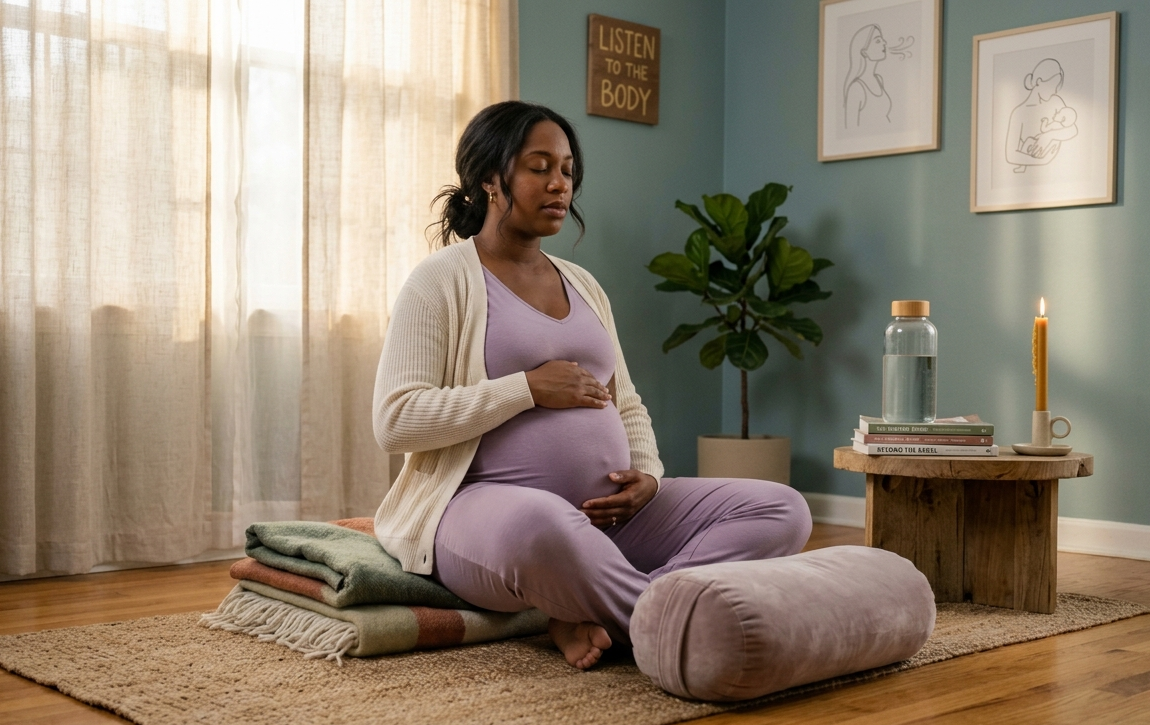
Is Your Somatic Pregnancy movement Movement Helping You Feel or Just Helping You “Do”?
After confirming you are pregnant, everyone in your life treats your body as a project to manage. They prescribe various foods, vitamins, and “safe” exercises for you to complete. However, in the middle of also planning medical appointments and gathering baby supplies, have you ever stopped to ask yourself: When was the last time I really felt connected with the child who is growing inside of me and how does my body feel during this change?
Pregnancy is the most somatic (body-centered) phase of your life. However, for many women, their physical changes (i.e., center of gravity shifting, skin stretching, breathlessness on stairs) cause them to feel like their bodies have betrayed them. They no longer feel the same body they once knew. Rather than being an additional “goal” of fitness, Somatic Awareness and Mindful Movement can serve as the basic tools to maintain your mental and physical well-being during pregnancy.
Your breathing is your guide. The future tends to create worry when we think about having a baby. The labor and the health of our newborn are common thoughts, as well as whether or not you’re ready to be a parent. Through somatic pregnancy movement, you can redirect your anxious “future mind” back into your actual “present body”, using breath as your greatest source of energy.
Pregnant women can benefit from using pranayama techniques to help create an emotional bond with their unborn child, and to help them relax prior to delivery. Pranayama is more than simply providing additional oxygen for the blood; it is a means of controlling the breath through numerous different forms—techniques include. For example, Ujjayi (Victory Breath), or Bhramari (Bee Humming-Breath), and so on—all meant to initiate the parasympathetic nervous system’s relaxation response.
Did you know that the muscles of your jaw connect with the pelvic floor? If you clench your teeth from stress and anxiety, then you will also tighten your birth canal by doing this. By practicing “soft jaw” breathing today, you will allow your body to open during labor. The practice provides the space your baby needs to enter the world.
To perform a very brief somatic check-in, take a minute and close your eyes and just breathe. What is the current area of your breath? Is it in your chest? While long breaths may decrease cortisol levels (stress hormones), it also provides a sense of security for your unborn child.
- The Pelvic Floor (it’s much more than just a squeeze!)
You may have heard of Kegel exercises. For some expectant mothers, the issue lies not in the strength of the muscles. The problem is having functional release with them.
When the pelvic floor muscles are constantly engaged and tight, it ultimately cause discomfort. It results in a more difficult delivery, therefore causing difficulty pushing through labour.
The Mindful Map: This tool provides somatic awareness of the four corners of the pelvic floor. They are identified as the pubic bone, the tailbone, and the two sit bones. You will be able to locate the 4 corners of the pelvic floor, as well as developing this awareness with your healthcare professional.
The Elevator Visualization: Visualizing your pelvic floor as an elevator (going down to the basement on the inhale and coming back up again to the 1st floor on the exhale) helps to release muscular tension and allow you to breathe using your diaphragm.
Movement Saying – “hip circles” or “figure 8s” provide support to the pelvic floor muscles by maintaining the flexibility. They can properly respond to the contractions and/or releases of the pelvic floor with such practices. It also keeps the pelvic floor muscles from becoming overworked/over trained and/or tight from lack of movement.
2. Restorative Poses: Medication for Back Pain
As your belly grows bigger so does your weight and thus so will the stress on your lower back. Many people think they can ‘stretch out’ their discomfort from the back. However, somatic pregnancy movement believes that we can support and relieve the pain through movement.
Supported Child’s Pose:
Lay your body across a bolster or a stack of pillows with your chest touching the floor. This helps relieve the muscles in your lower back from “guarding” themselves. Mothers finally release all the tension they have been holding on to.
Wall Squats For Grounding:
You can strengthen your legs while simultaneously providing an alignment for your spine by using a wall and squatting down approximately halfway (legs flat on the floor). This will also cause no damage to your joints.
Side-Lying Savasana:
Laying on your right side in a sleep position can be used to help your nervous system reset. By placing a pillow between your knees and a pillow underneath your belly, it tells your brain that your whole body is supported which allows your deep fascia to finally relax.
Proprioception & Balance: As your center of gravity changes, your brain must also learn to relearn location. Having more mindful, gentle movements will help you stop yourself from falling over and will also build your proprioceptive confidence in moving through your last three months of pregnancy.
The Final Question:
Your body is going through one of the most complex biological dances in the universe, and it is already doing such for you. To figure out what you want from life, just pay attention to how your body feels.
What is the body’s sensation right now? How did you accept it as a “setback” or “injury” but still received the message that you paid attention to?

Can you write about this topic more in your next post? Do share please.
Hey Genesis! Glad you like this post. I will try my best to share more on this topic.