We never say that healthcare professionals are untrustworthy. They are much needed for managing the health and wellness of the general public. For many years, several professionals have been following the same cautious advice for every knee patient. Even the patient with osteoarthritis was told to rest, ice, and not stress. Movement for arthritis acts like a medicine. When you restrict your knees, the cartilage degrades faster. The words sound simple, but lead to a detrimental cycle, which we will share in this article. Let’s understand with this simple diagram-

When the patient chooses to rest during pain, it leads to stiffness and weakness.
However, doctors nowadays are making a new shift in musculoskeletal medicine. After conducting several researches and scientific studies, they found movement is the powerful medicine for the knees.
This article dives deep into the science to explain the reasons that make low impact aerobic exercises like yoga as the perfect guard against knee osteoarthritis.
Understanding Osteoarthritis: Why Rest Fails
There is no joking about functioning of movement. To understand better, let’s start with explaining what OA is and how movement impacts on it.
Osteoarthritis is more than just “wear and tear”. It is a chronic condition that affects the whole knee joint. OA patient experiences the cartilage breakdown, alteration in the bone, and inflammation in the joint lining (also known as synovium). That’s the reason why doctors today recommend movement for arthritis patients.
The Biological Necessity of Movement for Arthritis and knee pain
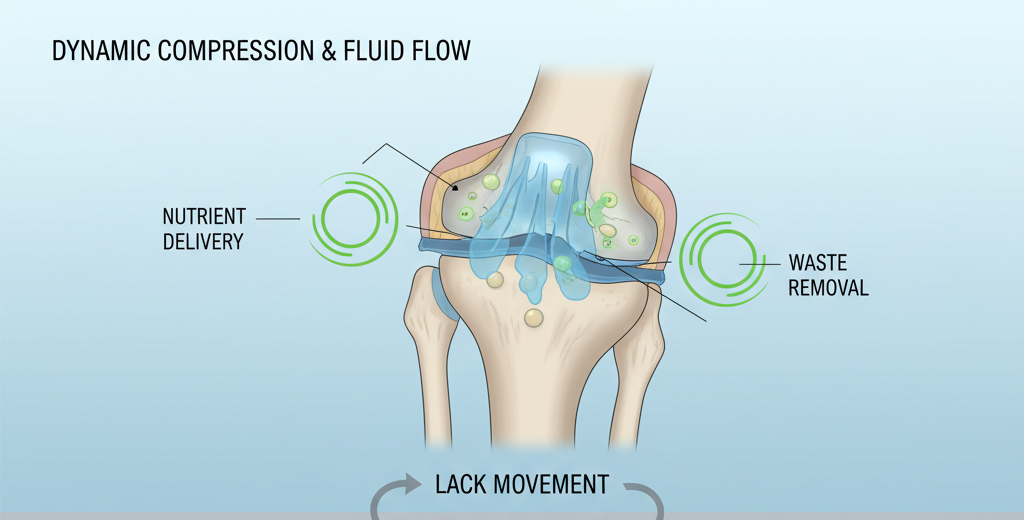
The cartilage doesn’t have its own blood supply. There is no mechanism inside the body through which it automatically gets nutrients and eliminates waste. How to make it possible? The – compression and decompression movement is the key.
- Synovial Fluid Circulation: There is a special fluid surrounds the knee joint – synovial fluid. It is thick and slippery lubricant to joints that help in accessing all essential nutrients. When a patient moves, it changes the pressure of joint and enables the fluid to flow through the cartilage surface. This mechanism expels waste and makes oxygen available for the joint.

When you restrict the movement for longer time, the joint fluid becomes thick and stagnant. Due to lack of nutrition, your knees become stiff.
- Cartilage Health: There are research based reports that suggest regular exercising as helpful tool for maintaining cartilage. When the patient performs regular exercise, it release tension and stress from the body. This further helps in repairing and recovering cartilage cells (chondrocytes) faster. The tissue matrix get in shape, which enhances the structural resilience. A bedridden and inactive lifestyle can worsen cartilage health. Movement for arthritis can help mitigate the worst effects.
Getting Started: The Gold Standard Low-Impact Activities
Always prefer the consistency over intensity. Try to start with a 15 minutes walking everyday and gradually take on 40 minutes of moderate aerobic activity every day. Starting with low-impact exercises is always helpful.
1. Walking: The Foundation (50-70% of max heart rate)
The simple and easy therapy is walking. When you walk, the movement stimulates synovial fluid circulation and your knees start receiving their portion of nutrition.
Actionable Tip: Choose grassy walkways or premium treadmill.
2. Cycling: Quadriceps Powerhouse
Cycling is the next best exercise for your knees because it strengthens your quadriceps and hamstrings without impact. This gives you stronger leg muscles and which can further act like natural shock absorbers.
- Actionable Tip: Ensure your bike seat is adjusted correctly. When your pedal is at the lowest point, your knee should still have a slight (5-10 degree) bend. A seat that is too low forces your knee into a deep, stressful bend.
3. Aquatic Exercise (Water Therapy)
Water therapy is the most gentle option for those who are seeking for medical attention. Swimming and water treadmill are a few options that help in reducing the gravitational load on your joints significantly. Your full-body muscles workout can be done with water resistance.
Actionable Tip: Start with simple water walking or shallow-water aerobics. Even just moving your legs in the water can be incredibly beneficial. The warmth of a heated pool can also soothe chronic pain.
The Critical Role of Physical Therapy (PT)
It is advisable to ask for professional assistance before you hit the pavement or pool.
A PT is not an ordinary but a specialist who can take care of your knees. The expert will:
- Identify Biomechanical Faults: Check if weaknesses in other areas—like the hips or core. Both points are responsible for knee health. If the person has weak hip muscles, for example, he or she may suffer from knee pain.
- Develop a Strength Protocol: A professional will plan the low-load strengthening exercises for the muscles surrounding the knee. This is because the experts value long-term stability. Chair squats, straight leg raises, and glute bridges are a few examples.
- Ensure Proper Form: The expert knows the right technique and that is why they work differently. They ensure proper posture to maximize benefit and minimize injury risk.
Conclusion: Reclaiming Your Mobility
Mobility is the new remedy to the knee pain. In chronic condition, such as osteoarthritis, knee pain is still manageable. Regular workout without impacting the knees can aid in treating the knee joints. Movement for arthritis acts as a healing mantra. It’s time to leave the old fear of “wearing out of knees with movement”, because science has revealed the opposite to be true. Active lifestyle can help maintain cartilage health, joint lubrication, and overall pain management.