Yoga Breathing and Deep Relaxation: A combo to Calmness and Clarity
Life and breath are co-partners. The One runs when the other works. Breath can be considered the first and last action carried out in one’s very own world. Most of the time, breath is considered gratuitous. Most of us are unaware of the importance of this mechanism. For many, it is shallow or intermittent rhythms, just like so many other things-stress or distraction.
And then, Yoga Breathing and Deep Relaxation exercises could act in much the same way to create a new level of awareness, balance, and wholeness, uniting ancient wisdom with contemporary insights so that one might find their way back to calmness and clarity-to resilience in body and mind.
Pranayama-Yoga Breathing
Pranayama is the yogic system of breathing exercises which is much larger than mere inhalation and exhalation. The complete meaning of the term implies that the first half of training is going to give energy; the second half of the word refers to elongation and control. Pranayama may therefore be viewed as a system of exercises designed to bring energy into balance and control through conscious choice in breath control.
Breath is acting as a bridge between physical being and the mind. Physiologists and psychologists have found that the evolving rhythm and depth of the breath changes the states of body and the mind.
Fundamentals of Yoga Breathing Techniques
Aside from these general types, there are varying specific systems used in controlling the respiration for varying presiding purposes. Some of these most commonly used include:
Abdominal breathing: The deep breathing is always better for practicing. This is an extremely efficient method of oxygenation and of relaxing the nervous system.
Alternate Nostril Breathing (Nadi Shodhana): Here, the practitioner swaps breathing between left and right nostrils, isolating the sides individually by use of the use of the fingers. It balances the left and right sides of the brain and balances and harmonizes the spirit.
Ujjayi breathing: It creates the sound while inhaling through the throat. It has another name as well, i.e. the earth or the seas breathe. The minimal contraction of the airway increases the length of the inhalation and exhalation, and so attracts attention and amplifies meditative awareness.
Kapalabhati (Skull Shining Breath): A strong exercise which consists of active expirations and passive inhalations. Awakens energy; purifies the nostrils; enlivens the mind.
All of them should be practiced patiently with lightness and allow for slow development towards awareness of some subtler inner states.
The Essence of Profound Relaxation
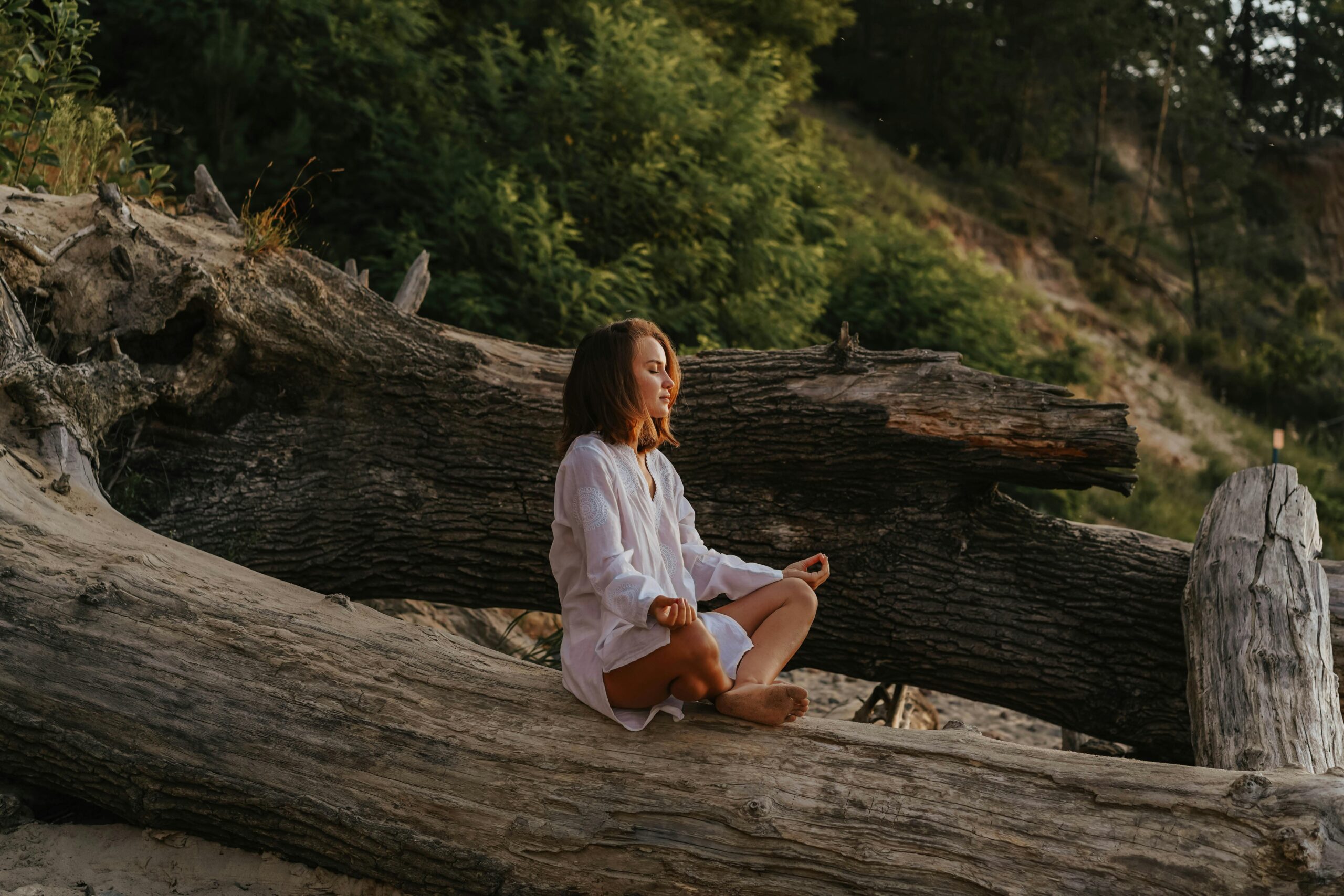
The Yoga Breathing and Deep Relaxation accompanies breath practices. Do not confuse relaxation with just rest. Deep relaxation is internally first an active process of releasing muscular, emotional, and mental tension. It is one of the conscious and purposeful acts of letting go under the guidance of guru or teacher.
Yoga Nidra or yogic sleep becomes one of the most effective measures. Here, the body lies free and comfortably, often in savasana (corpse pose), and the stages of awareness are guided through. The systematic scan of the body brings sensations, breath, and imagery into focus. The mind stays awake while the body descends into deep relaxation.
Yoga Breathing and Deep Relaxation trains the nervous system to no longer stimulate itself into perpetual wakefulness and instead to bring forth quiet mending. The body begins releasing its tension from the knotted areas, and the mind freed this time from its typical frantic chattering of concerns and plans.
The Interrelationship Between Relaxation and Breathing
One is involved with the other: the two are intertwined. Breathing teaches one about certain inner states: shallow and quick when anxious, deep and slow when calm. Therefore, through conscious manipulation of these patterns, the people can lead themselves into more anticipatory states for relaxation.The practice of relaxation goes hand-in-hand with awareness of breathing. Just to pay attention to the movement of breathing can calm attention, setting it up for proper rest.
Scientific Evidence
Modern science is slowly beginning to vindicate what these time honoured traditions have been maintaining. With the control of experiment, controlled studies showed that controlled breathing can bring about lower activity in automatic nervous systems, prevent stress-related damage, and even calm emotional imbalances. Yoga Breathing and Deep Relaxation practices inhibit the stress system and thereby promote hormonal balance and sleep maintenance. Research work related with Yoga Nidra shows its capability of giving the brain a breadcrumb trail into deep sleep while mindfulness augments restoration.
Thus, these inferences suggest that just as yoga breathing and relaxation do not come under the domain of esoteric practices, so these may comprise pragmatic modalities of which there is some evidence.
Real-World Applications
The beauty of these subtle arts is that they find full application in daily life. No assistant or equipment for anything is necessary; taking a few moments of focused attention will suffice. Here are some suggestions of how to adapt everything to practical purposes:
Morning Centering: Five minutes of belly breathing while relaxing and awakening energy sets the tone for the day
Workplace Pause: Two or three rounds of alternate nostril breathing may restore focus on a extremely stressful day.
Common in all instances: Whatever the duration-consistency is the rule; even a little bit a few times regularly can lead to some realizable change, given enough time.
Making It a Sustainable Practice
Creating of self-nurture space is a matter of constructing an old patch; it needs patience and regularity. Off-time at five, increasing the time according to comfort, may be a nice practice for beginners. Be not harsh toward yourself; rather, respect your emotions.
Create schedules of breathing, relaxation, and meditation. Such a combination guarantees the most organic experience that sustains the consciousness of body-mind. Take a course or study under a master, particularly when you engage higher practices.
Safety and Precautions
The Yoga Breathing and Deep Relaxation, in general, are safe, provided one does these practices with acute awareness. If, in vigorous practices, such as Kapalabharti, things become overdone, undesirable after-effects of dizziness or discomfort may follow. It would, therefore, be best for beginners to gradually slow down on things and, if at all possible, under the guidance of a qualified instructor. Anyone afflicted with rare medical conditions must obtain the sanction of a health professional before adopting any advanced practices.
Always remember this unifying principle: be gentle. Neither breathing nor relaxation must ever be performed with effort. Not that the intention of doing this would be to achieve anything, but rather it is to learn to let go, to not force but to allow for the natural opening.